Programming


I great at learning a new programing language I've learned how to code in C++, C#, GD Script. I also enjoy taking already existing code and modifying, tweaking, adding and iterating on it.
Projects
Pieces

Pieces
Capstone project
Teach kids about their emotions, emotional intelligence and that their actions have consequences.
Worked with the CYC program
- Miro, Godot
MJ:HSGF
MJ:HSGF

3rd year project
Parody of gacha games mixed with idle game.
- Unity, Miro, Confluence

Solo project
Summer of 2025
Learn how to use Godot. Was bored and wanted to make a game.
- Godot, Miro
Pieces
Pieces, it is a story-rich exploration game on PC featuring 2D isometric gameplay. Since we are taking part in the CYC collaboration, our target audience are kids aged 8 - 12. Pieces is about being a colourless person in a world full of colours. Players interact with NPCs to see how their choices shape them, becoming more colorful with each interaction.
Role: Game Designer, Programmer
Engine: Godot
Language: GD Script
Genre: Narrative, 2D Puzzle, Educational
Type: Reading Novel, Fill in the grid
Team Size: 5
Why: Capstone project
From Sept 2025 - July 2026
Will be attending level up!

Contributions
General

I programmed the world for players to explore.

I programmed almost everything in the game! I used GD script to program everything.

Finally a journal to keep the memories of what's happened so far
I programmed the world for players to explore.
Grid Puzzle

I got the basic grid and pick up and place functionality from this YouTube video.
I then needed to make changes and additions to this as I ideated through the game. I also had to make it flexible enough for and modular for changes and for teammates to understand


Then I made it so you can place down space on the screen since it was originally gonna be an inventory system like RE 4. This is still necessary for the puzzle but it was a priority for the inventory


Next to add challenge I added a rule for placing the blocks. Some pieces couldn't be next to other colours because of their emotional ties. This would also be visually shown to the player. This was ultimately scrapped but a cool thing.


Finally, I added the puzzle elements when I pivoted. So now multiple pieces would spawn after dialogue had ended and had a win condition. After finishing the puzzle a resonate screen shows up before players can close the puzzle screen.
Journal
Page changing
Page Nodes
/ Layout
Here I have the nodes and the generic layout of the pages. This is a prefab so that I can use this for the multiple pages for the characters and a different one for the different emotions. I have 2 versions of each page. One is filled in with the information and the other is filled out with blank statements and pictures.
Page Changing
So when the player swaps pages the game goes through the same code. Check metadata, check direction arrows, and a character page check. These all work because I gave the page nodes metadata and put them in a group.
Journal Entries
Similar to the page changing I used metadata and groups. I also use the signal function from Dialogic to send a signal during specific dialogue to the journal, that also triggers the icon shake and ding.


Mayor Jubilee: Heavenly Star Girls Festival
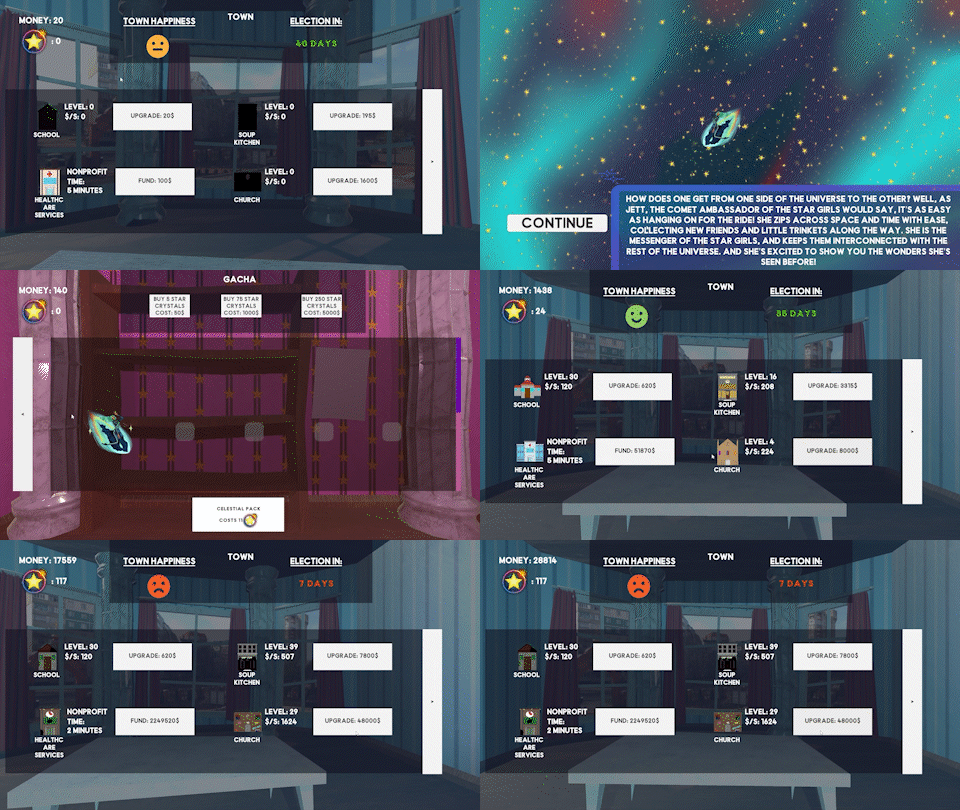
MJ:HSGF is a story-based gacha simulator where the player takes the role of Jubilee, the meek and gullible mayor of a small town called Summersville. The mayor is tasked with the upkeep and repair of the town, that is until Heavenly StarGirls Corp. appears suddenly one day, advertising their brand new gacha game, Heavenly StarGirls Festival. Mayor Jubilee must now decide... is the town worth the trouble? Or is the call of the beautiful, yet elusive Star Girls too powerful?
Role: Programmer, Game Designer, UI Assets
Engine: Unity
Genre: Idle, Gacha
Team Size: 5
Why: 3rd year game design project
From Sept 2024 - April 2025
Contributions
UI Building change
First thing I did was understand the code that the other programmers had written. I hadn't coded anything nor explained how anything worked, they just showed me the script for the upgradable buildings.
After I had a basic understanding I added an array that would hold the images containing the different levels of the building. Then I used the variable of the happiness level to dictate which image it should use.
Finally I used the buildings level variable to determine if it should use its locked or unlocked version. After the buy/upgrade is clicked it checks if its more than 0 then it goes into whatever the happiness level is at.


Working in engine
A Game About Diving in A Hole
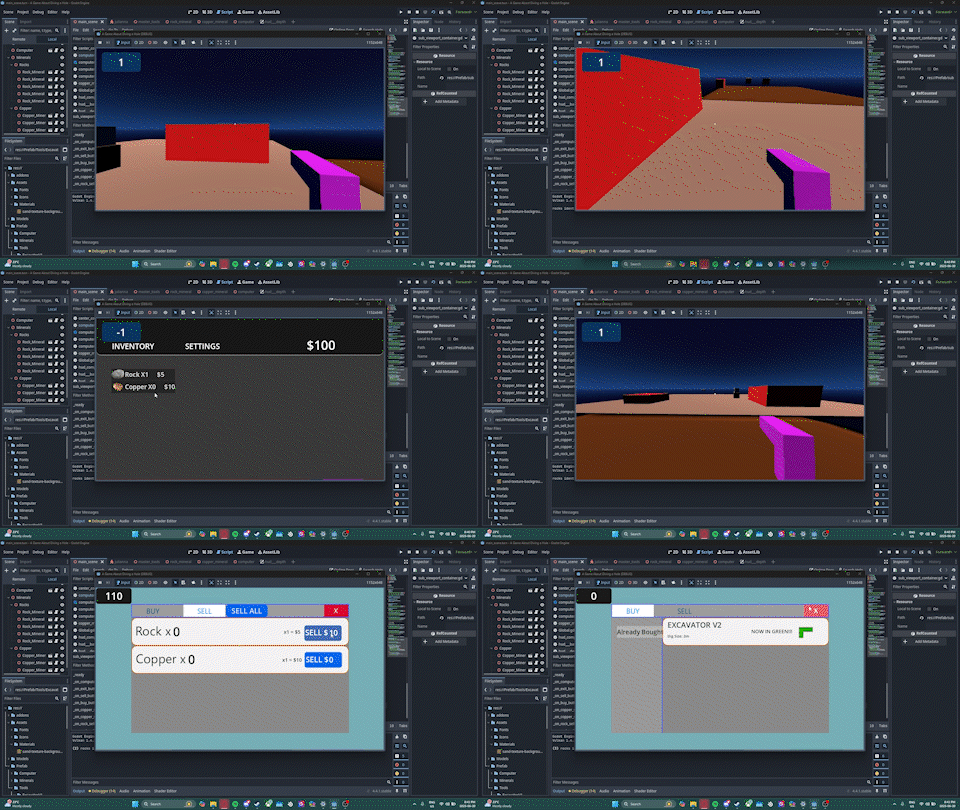
A Game About Diving in a Hole is a game like 'A game about digging a hole". It's currently just a prototype but it has all its functionality: digging, swimming, a shop. This would be a more horror based game than the inspiration. It would be set near the bottom of the ocean where a company has hired you to mine resources for them and to conduct an experiment.
Role: Programmer, Game Designer
Engine: Godot
Genre: Like 'a game about digging a hole'
Team Size: Solo
Why: Learn Godot, bored during summer
From July 2025 - Sept 2025

Contributions
Learning Godot
First I found and followed a video tutorial to make a 3D platformer. This was to learn the basics of the engine and to find out where things are.
Once I understood how the engine works I got started on this game. The thing I worked on the most is the character controller and the way 3D vision works so being able to pick up objects and interacting with them.
Then I created an inventory for those items to go to. As well as the computer to sell the items
Finally I created a modular upgradable version of the dig gun.
As I started school again and worked on Pieces I kept finding functions and ways to improve this game such as states and how useful they are. A better understanding of the engine, arrays and other functions. Also, having a better workflow and debugging process.


